
 Image 1 of 1
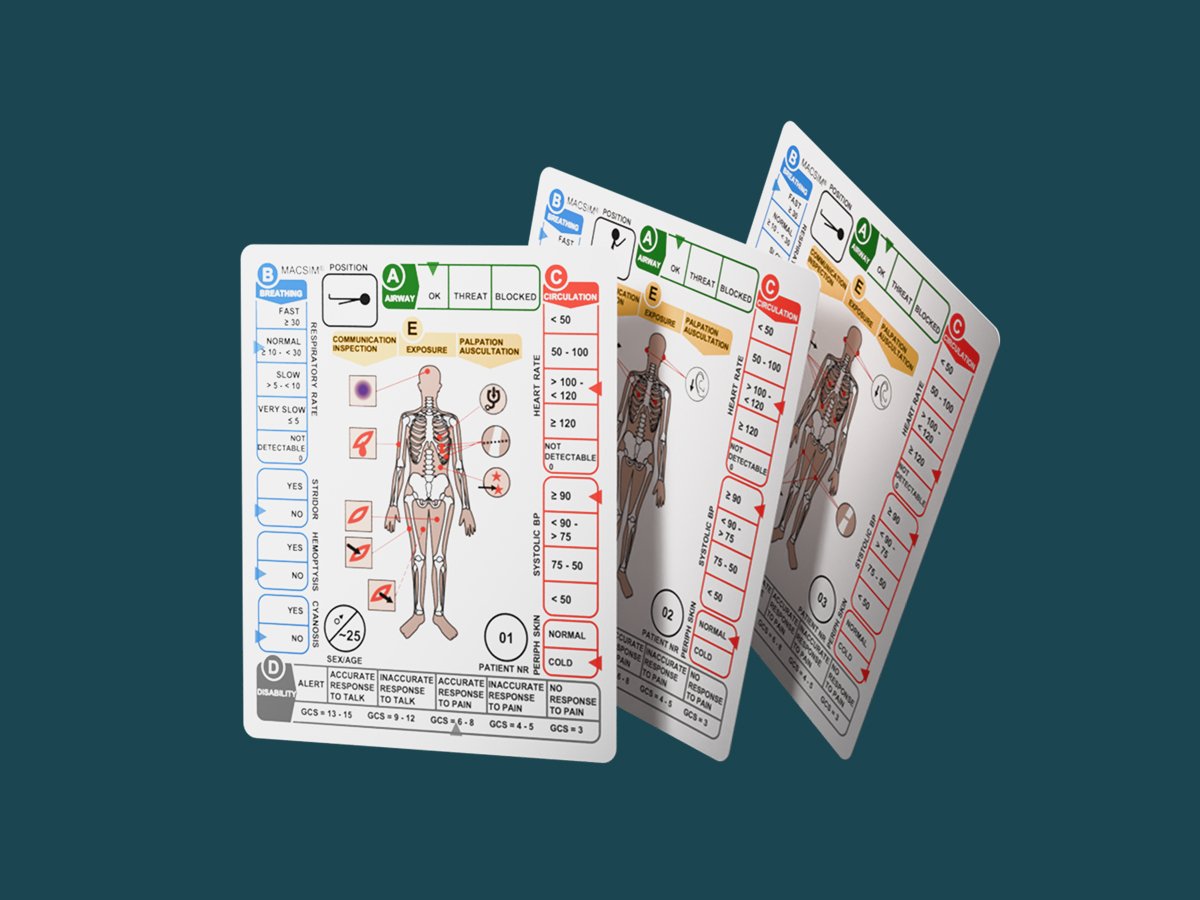
Casualty Cards
Size: Laminated NeverTear, 18 x 14 cm
Front (bold heading)
Patient name:
Age:
Sex:
Time found:
Vital signs
Airway: (clear/obstructed) — interventions:
Breathing: RR_____ SpO2_____ — interventions:
Circulation: HR_____ BP_____ — perfusion: (normal/poor) — interventions:
Disability: GCS_____ pupils_____ — interventions:
Exposure: injuries/bleeding/temperature — interventions:
Triage & priority
Triage category: (Immediate/Delayed/Minor/Expectant)
Priority for transport: (High/Medium/Low)
Treatments given (tick boxes)
Airway maneuvers
Suction
Oxygen (L/min) _____
Chest decompression
Hemorrhage control (tourniquet/dressing)
IV/IO access — fluids given: type/amount
Medications (name/dose/time)
Immobilization (cervical/spine/splint)
Burn care
Analgesia
Other:
History / mechanism
Incident/mechanism:
Allergies:
Medications:
Past medical history:
Last known well / last meal:
Observations timeline (time / RR / HR / BP / SpO2 / GCS / interventions)
Notes for receiving facility
Concise summary of injuries and treatments:
Recommended receiving unit (ED/Trauma/Critical care):
Contact/incident ID:
Record
Card completed by (name/role):
Date / time:
Back (small print)
Clear instructions to transfer with patient
Space for bar code / ID sticker
Designed for quick, at-a-glance documentation in prehospital and mass-casualty settings.